
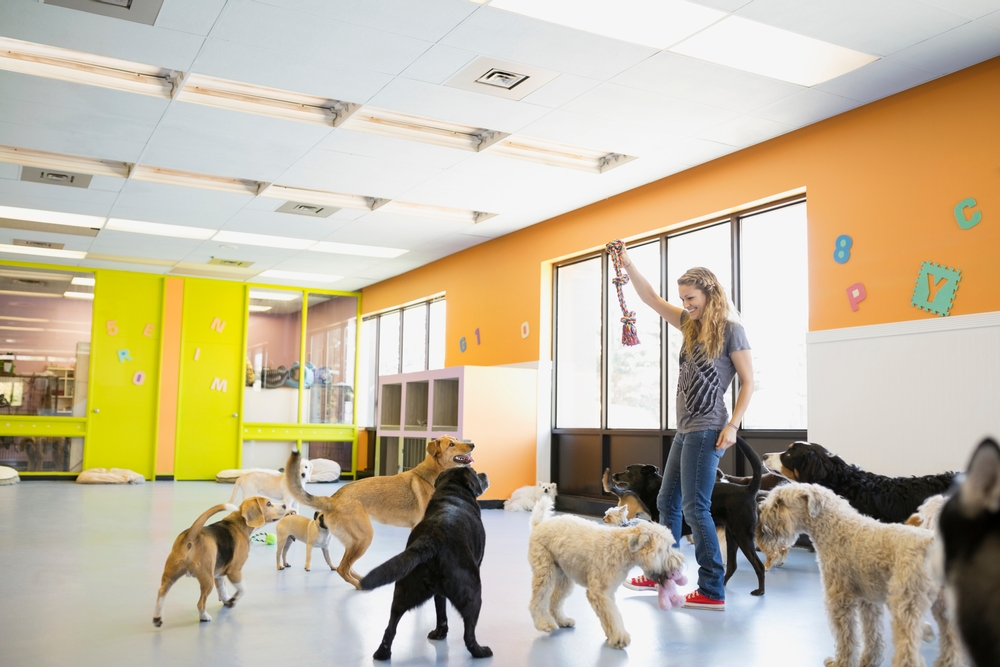
Dog daycare is a wonderful fit for social, dog-tolerant dogs and a genuinely stressful experience for dogs who find group play overwhelming, which is why the decision works best in three steps: right dog, right place, right time. A veterinarian’s first question is not which facility you are considering but how your dog behaves around unfamiliar dogs, because that answer sorts everything else. If group play suits your dog, look for matched playgroups, trained supervision, and vaccine rules the facility actually enforces. Timing comes last: a puppy needs to be far enough along in the vaccine series before a room full of new dogs is reasonably safe. And if your dog is not a daycare dog, quieter options like boarding, a dog walker, or enrichment at home are the better match, not a consolation prize.
Sorting through those three decisions is a conversation we are happy to slow down for at East Wind Animal Hospital, starting with an honest read on your dog’s temperament. During the visit we can check the vaccines that facilities around Willow Grove typically require, screen a stool sample in our in-house lab, and set up a preventative care plan for the extra exposure of group play. When daycare is on the table, request an appointment and we will help you answer all three questions for your dog.
Before the First Drop-Off
- The questions you ask up front tell you more about a daycare than any tour or website ever will.
- Vaccines and a good cleaning routine lower the risk of illness in group play, but they don’t erase it, so keeping sick dogs home matters just as much.
- Not every dog belongs in a busy playgroup, and a quieter option like boarding or a dog walker is a smarter fit for some dogs, not a lesser one.
- A quick pre-daycare wellness visit catches lapsed vaccines, parasites, and behavior concerns before they turn into a problem on the play floor.
How Do You Know If Daycare Suits Your Dog?
Temperament, not breed or age, decides whether daycare fits, so an honest look at how your dog handles strangers comes first. Daycare suits social, dog-tolerant dogs who read others well and shrug off a little rough play, and it stresses dogs who find crowds overwhelming.
Every dog carries their own tolerance for group settings, and that ceiling shifts as a dog ages or develops new sensitivities. The bouncy two-year-old who loved the chaos can become the seven-year-old who’d rather nap in a sunbeam, and that’s a normal change, not a failure.
On the floor, loose, wiggly canine body language signals a dog who’s having a good time, while a tucked tail, pinned ears, or repeated attempts to hide say the opposite.
| Signs daycare suits your dog | Signs to pause and reassess |
| Greets new dogs with loose, relaxed body language | Freezes, hides, or keeps trying to leave the group |
| Comes home pleasantly tired and content | Comes home wired, shut down, or reluctant to return |
| Bounces back quickly after normal play scuffles | Growls, snaps, or guards toys and space |
| Enjoys meeting unfamiliar dogs | Does better with one calm friend than a crowd |
For nervous or reactive dogs, talk with us before booking a trial day so it’s a fair test rather than a setup for a hard afternoon.
What Separates a Great Dog Daycare From a Risky One?
A strong daycare runs on safe, matched play, real rest breaks, trained staff who watch constantly, and clear communication with families. Quality varies enormously from one building to the next, and a spotless lobby tells you almost nothing about the play floor.
A well-run floor is where structured socialization does its quiet work, building a dog’s confidence and teaching them to read other dogs without tipping into stress, but only when groups are matched by size and play style and someone is paying attention.
Structured downtime matters just as much: dogs who play flat-out for hours get overtired and cranky, and a worn-thin dog is where most squabbles begin. We recommend a wellness visit before any trial day to confirm vaccines, parasite prevention, and overall health.
Which Questions Reveal How a Daycare Is Really Run?
The questions worth asking cut to staffing, supervision, grouping, rest, cleaning, and how the building copes with bad weather, and a good facility answers each one specifically while a careless one stays vague. The point of safe group play isn’t zero conflict forever, but a trained team that spots rising tension and steps in before anyone gets hurt.
| What to ask | What a good answer sounds like |
| Which vaccines and preventives do you require, and how do you verify them? | Named requirements checked against records, no exceptions |
| What’s your staff-to-dog ratio? | A specific number, with more hands for bigger or higher-energy groups |
| How is staff trained to read body language and defuse tension? | Ongoing training in canine signals and calm de-escalation, never punishment |
| How do staff handle introducing dogs to an established group? | Slow, controlled meetings on neutral ground prevent most first-day trouble |
| How do you screen new dogs and run trial days? | A temperament assessment before a dog ever joins a full group |
| How are dogs grouped? | By size, age, and play style, with puppies and seniors kept separate |
| What happens when a dog gets overwhelmed? | A quiet rest area and a break, not more forced play |
| Can I watch the play floor and rest areas? | An open yes, often with cameras or viewing windows |
| How do you manage toys and feeding to prevent guarding? | Toys spread out or put away, dogs fed separately |
| What’s your cleaning routine? | Daily disinfection of floors, bowls, and shared gear |
| How do you handle injuries and illness? | Clear steps, quick contact with families, and a symptom-free return policy |
| Do you accommodate seniors or dogs with medical needs? | Yes, with a plan for medications, mobility, and shorter days |
Beyond staff training and dog management, where your dog plays is just as important. Summers around Willow Grove get hot and sticky, and a good daycare runs climate control, keeps water within reach, offers indoor enrichment when dogs can’t go out, and watches its play surfaces for good footing. Flat-faced breeds like Bulldogs and Pugs, seniors, heavier dogs, and any dog with heart or airway trouble overheat far faster and need extra eyes. For a dog who just seems a little off after a warm afternoon, our team offers same-day urgent care during our extended care hours.
Why Can a Good Daycare Be Safer Than the Dog Park?
A quality daycare vets every dog before they join the group, keeps trained handlers watching the whole time, and answers to its clients when something goes wrong. A public dog park offers none of that, even though the gate is free.
The dog park risks come down to who else shows up: no health screening, no temperament vetting, and no trained staff to step in before a scuffle becomes an injury. Parks aren’t off-limits for every dog, though, and a well-socialized adult with a solid recall can do fine at a quiet park in off-peak hours. If you’re weighing the two, our team can help you match the choice to your dog’s temperament and health.
When Can a Puppy Start Daycare?
Puppies should wait for general daycare until their core vaccine series is finished, usually around sixteen weeks, because a still-developing immune system in a room full of strange dogs is a real disease risk. Some daycares run dedicated puppy groups with stricter health rules, which can be a fit once a puppy is well along in the series.
For a puppy program, the bar goes up. Ask whether puppies play only with age-matched pups, how long sessions run, how often the space is cleaned, and what the staff-to-puppy ratio looks like. A tired puppy learns nothing good, so shorter days are a feature, not a shortcut.
Puppy Classes, Daycare, or the Dog Park: What Comes First?
Socialization can’t wait for the last shot. The window for puppy socialization closes early in life, so holding a puppy in isolation until the series is done can cost more than it protects. The safest bridge is a structured class, which makes early socialization during the vaccine series safe when the room is cleaned well and every attendee meets the same health requirements.
Dog parks sit at the opposite end and carry the highest risk for a young puppy. Finishing the series and graduating from class sets a puppy up to move into daycare later, and the same red flags you’d watch for at a daycare apply to a class, only more strictly.
Which Vaccines and Parasite Prevention Does Daycare Require?
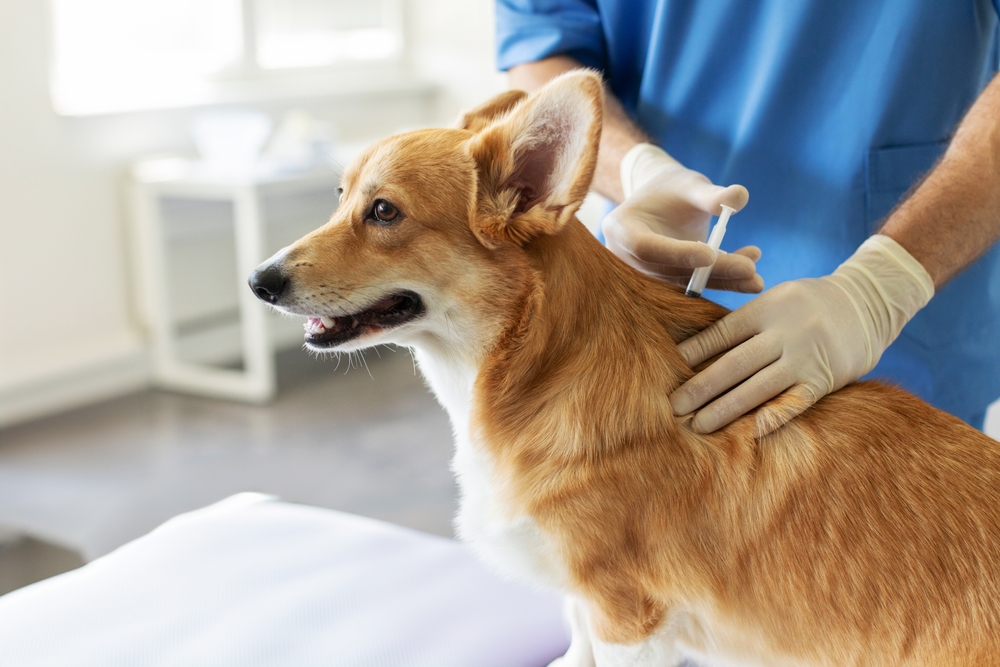
Most facilities require rabies along with distemper-parvo, or DHPP, and bordetella, and many add canine influenza and leptospirosis depending on the region. Ask exactly which ones a facility wants and how it checks them, because the one dog with lapsed records is the risk to every other dog in the room.
Shared yards and close contact also make intestinal parasites easy to pass around, so routine fecal testing and year-round heartworm, flea, and tick prevention belong on every daycare dog’s checklist. Facilities typically add a symptom-free stretch before a dog returns after any illness.
We can confirm which vaccines your dog needs for a specific facility, provide the documentation it asks for, and tailor a prevention plan for daycare dogs.
What Contagious Illnesses Spread at Daycare?
Group play raises the odds of catching something contagious even with solid cleaning and vaccine rules, because dogs share air, water, and surfaces all day. The best defense stays the same: vaccination, parasite control, and keeping sick dogs home.
A few illnesses spread more readily than the rest when dogs are packed together:
- Gastrointestinal: Parvovirus is durable enough to linger in the environment for months, which is why full vaccination and strict sick-dog exclusion matter so much. Giardia and other intestinal bugs can hide in a dog who looks completely normal, so routine fecal testing catches infections a glance at the stool would miss.
- Respiratory: Kennel cough travels easily through the air when dogs share close quarters, and canine influenza moves fast through a group. Both look a lot like a cough that won’t quit. A facility that sends any coughing dog home is protecting the whole group.
- Skin: Itchy patches, hair loss, or crusty skin can point to ringworm, fleas, or sarcoptic mange, all of which move between dogs and sometimes to people, so they need a look under the microscope rather than a wait-and-see.
- Bacterial: Leptospirosis spreads through contaminated water and soil and can be spread to people, which is why the vaccine has become a common daycare requirement in wet, wooded areas like ours and is considered a core vaccine for all dogs.
If your dog comes home coughing, sluggish, or off their food after a daycare stretch, we can sort out what’s going on with our in-house diagnostics and start treatment before a mild bug turns into something bigger.
What Should You Check for After Daycare Pickup?
Give your dog a quick head-to-tail once-over after every pickup: run your hands over the coat for scrapes and sore spots, look at the eyes, and note any coughing, loose stool, or scratching over the next day or two. Most of what turns up is minor, but a few findings deserve a call.
Even a well-run daycare produces the occasional bump, and most are fine to clean at home and watch. A red, squinty, or weepy eye is different, since it can signal a scratch that needs prompt attention. Puncture wounds are the other exception: even small ones deserve a close look, because bite wounds often seal over on the surface while bacteria sit trapped in the deeper tissue underneath.
Any swelling, tenderness, discharge, or a wound your dog keeps licking is worth a call, so reach out and we’ll let you know whether it needs to be seen.
How Do You Get Your Dog Ready for a Smooth First Day?
Setting a dog up to succeed comes down to a gradual introduction and honest information for the staff. Sort out vaccines, preventives, and documentation early, and the trial day can be about one thing only: whether your dog enjoys the group.
Start With Trial Sessions and Honest Conversations
Short trial sessions and calm, low-drama drop-offs let a dog build confidence instead of getting flooded on the first morning. Be candid with staff about what matters: medication schedules, what sets off your dog’s anxiety, any physical limits, and quirks like resource guarding or a low tolerance for face-to-face greetings. Staff can only manage what they know about.
Handle the Health and Logistics Ahead of Time
A little preparation clears the way for a good first day:
- Book a wellness visit a week or two out: it confirms vaccines, checks overall health, and flags anything that would make group play risky.
- Update preventives and run a fresh fecal: current heartworm, flea, and tick coverage plus a recent stool check protect your dog and everyone else’s.
- Gather the paperwork: bring vaccine records and any medication instructions the facility requires.
- Plan a short trial day: a half day is plenty to see how your dog handles the group.
- Feed lightly before drop-off: a big meal right before active play can upset the stomach.
Your Dog Daycare Questions, Answered
How Often Is Too Often for Daycare?
There’s no single right number; it depends on the dog. Plenty of social, high-energy dogs thrive on three to five days a week, while others do best with one or two and quiet days in between to decompress. A dog who comes home happily tired and bounces back is telling you the schedule works, while one who turns clingy, cranky, or reluctant may be asking for less. Let recovery, not a calendar, set the pace.
Are Minor Scratches After Daycare Something to Worry About?
Most small scrapes are a normal part of active play and heal fine with gentle cleaning and a day or two of watching. Punctures and bites are the ones to take more seriously, along with anything that swells, oozes, grows tender, or makes your dog lick nonstop. When in doubt, a quick photo and a call to us settles it faster than waiting.
Why Does My Dog Suddenly Not Want to Go to Daycare?
A dog who used to love daycare and now drags their feet is worth listening to. Sometimes the cause is social, like a new dog in the group, a scary scuffle, or a change in familiar staff. Sometimes it’s physical, since pain from a sore joint, an ear infection, or plain aging can make the noise and bumping of group play unpleasant. Because the shift often points to discomfort a dog can’t put into words, a checkup is a smart first move before chalking it up to a mood.
The Right Daycare Call for Your Willow Grove Dog
The right daycare for the right dog is one of the best things a busy household can offer: exercise, company, and a happily worn-out dog at the end of the day. The wrong fit does the opposite, which is why the questions are worth asking.
Our part happens before the first drop-off: updating vaccines, taking an honest read on temperament, and preparing the documentation a facility will ask for. When you’re ready, schedule a pre-daycare exam and we’ll help you find the right daycare, or the right alternative, for your dog.



Leave A Comment