There is a particular moment many families describe: the dog who used to bound to the door now hesitates at the top of the stairs. The cat who slept on the high shelf has quietly started choosing the floor. Mobility changes in pets are easy to rationalize at first, but the earlier supportive care begins, the better the outcomes tend to be. Mobility assistance is not giving up. It is a tool that keeps your pet moving, engaged, and confident while underlying conditions are managed, and the strength they keep is the strength they have to work with.
At East Wind Animal Hospital in Willow Grove, our team approaches mobility support as an integrated part of patient care. If your pet is showing signs of difficulty moving, request an appointment so we can evaluate what is happening and build a support plan that fits your pet’s specific situation.
Signs Your Pet May Need Mobility Assistance
Mobility loss in dogs and cats rarely happens overnight. The earliest signs are easy to miss because pets instinctively mask discomfort and adjust their behavior to avoid pain. By the time something looks obviously wrong, the underlying condition has often been progressing for a while.
Early warning signs worth taking seriously:
- Morning stiffness that loosens after a few minutes of movement
- Reluctance to use stairs, jump onto furniture, or hop into the car
- Slipping on hard floors or hesitation to cross slick surfaces
- Gait changes including bunny hopping in the rear, swaying, or shorter strides
- Scuffed nails from dragging the feet
- Reduced grooming of hard-to-reach areas, particularly in cats
- Behavioral shifts like irritability when touched, withdrawal, or reluctance to play
- Difficulty rising from rest or pacing before settling
Osteoarthritis is the single most common driver of these changes, but joint disease, spinal conditions, and neurological problems can all produce similar early signs. The pattern matters more than any one symptom in isolation.
Sudden severe changes are different and warrant immediate evaluation. A pet who suddenly cannot bear weight, who collapses, who is dragging the back legs, or who has lost bladder or bowel control alongside weakness needs same-day care. Reach out for our urgent care services right away if any of these appear.
Spinal Conditions That Commonly Require Mobility Support
IVDD and FCE
Intervertebral disc disease (IVDD) happens when disc material between the vertebrae presses on the spinal cord. The range of presentations is wide: some dogs experience mild back pain that resolves with rest and medication, while others lose function in the hindlimbs over the course of hours and need emergency surgery. Chondrodystrophic breeds such as Dachshunds, Corgis, French Bulldogs, and Beagles are at highest risk, often presenting between three and seven years of age.
Fibrocartilaginous embolism (FCE) is a different kind of spinal event. A small piece of disc material lodges in a blood vessel supplying the spinal cord, causing sudden weakness or paralysis (usually on one side of the body). Unlike IVDD, FCE is not progressive, and most dogs recover meaningful function over weeks to months with rehabilitation and supportive care.
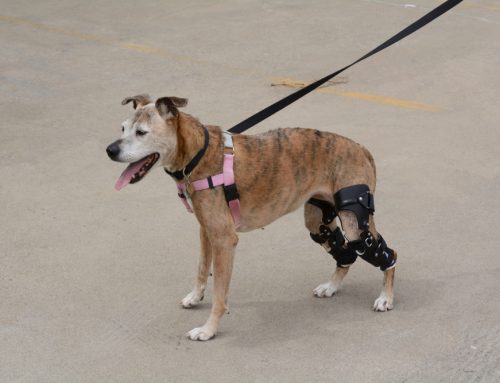
For both conditions, rear support harnesses are essential during recovery, allowing your dog to keep walking and using the affected limbs while strength rebuilds. For dogs left with permanent paralysis, a properly fitted mobility cart restores genuine independence.
Degenerative Myelopathy
Degenerative myelopathy (DM) is a progressive spinal cord disease most often seen in German Shepherds, Boxers, Corgis, and other large breeds. It begins with subtle hindlimb weakness, knuckling, or unsteady steps and progresses over months to a year or more. There is no cure, but supportive care extends comfort and mobility considerably.
The mobility plan for DM evolves through stages. Early on, traction aids and the occasional assist from a rear harness are often enough. As weakness progresses, a daily-use rear support harness becomes part of the routine. In the later stages, a mobility cart allows your dog to continue exploring, sniffing, and engaging with the world long after their hindlimbs have stopped supporting them on their own.
Amputation and Life on Three Legs
Osteosarcoma is the most common primary bone tumor in dogs and the most frequent reason for limb amputation in veterinary medicine. Affected dogs are usually large or giant breeds, and the tumor most often appears in the long bones of the legs. The pain from osteosarcoma is severe and constant, and amputation removes that pain source while extending quality life when combined with other treatment. Other reasons pets may need an amputation include severe nerve damage, non-healing or severe limb fractures, or congenital defects.
Most dogs adapt to three-legged life remarkably well. Within a few weeks of amputation surgery, most are walking confidently and engaging in normal activities. Front-leg amputees typically need more support during recovery than rear-leg amputees, since dogs carry roughly 60 percent of their weight on the front limbs. A well-fitted harness provides that support during the adjustment period and helps prevent strain on the remaining limbs.
The Tripawds community is a valuable resource for families navigating the post-amputation period. Reading other families’ experiences, seeing recovery timelines, and connecting with others living the same chapter helps the decision feel less isolating. Our surgical services handle amputations with expert care, and the team is happy to walk you through what to expect before, during, and after the procedure.
Types of Mobility Devices Available
Support Harnesses
Support harnesses come in three main configurations matched to the conditions they support:
- Rear-end harnesses: Best for hindlimb weakness from DM, IVDD recovery, hip dysplasia, or hindlimb amputation. A rear-end harness lets you bear part of your dog’s weight without straining your back or theirs.
- Front-end harnesses: Used for front-leg weakness, post-surgical recovery on a front limb, or front-leg amputation.
- Full-body harnesses: A full-body lift harness addresses dogs needing support at both ends, common in advanced DM, severe arthritis, or recovery from significant surgical procedures.
Proper fit is essential. A poorly fitting harness rubs, restricts breathing, or creates pressure points that make your dog avoid wearing it. Most pets adapt to harness use within a week when introduced positively with treats and short, calm sessions. Our pharmacy carries both a hind leg lifting harness and a front leg lifting harness for pets needing support in different areas.
Mobility Carts
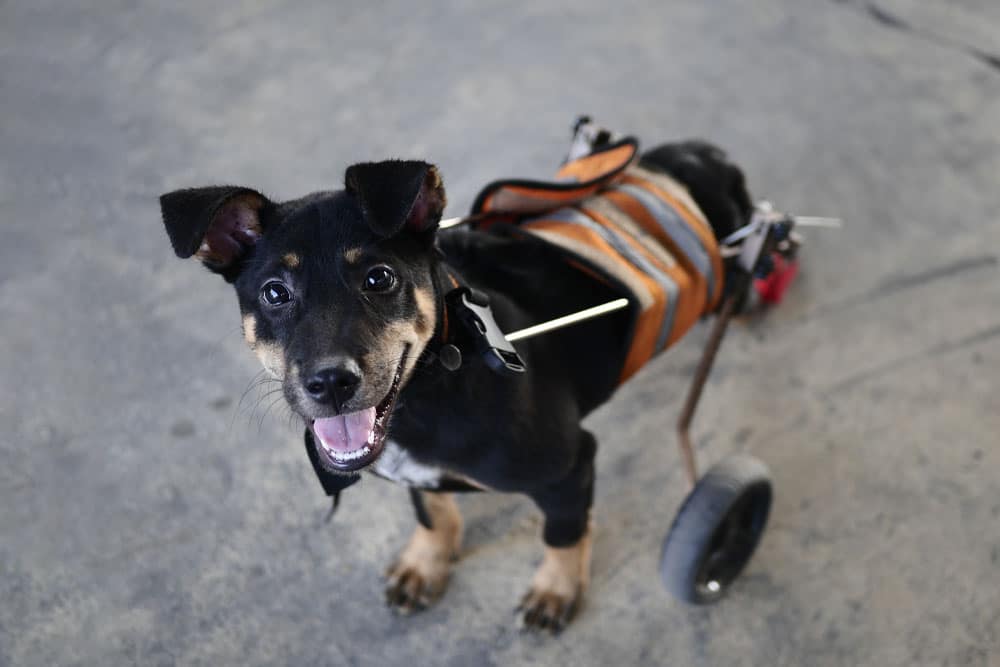
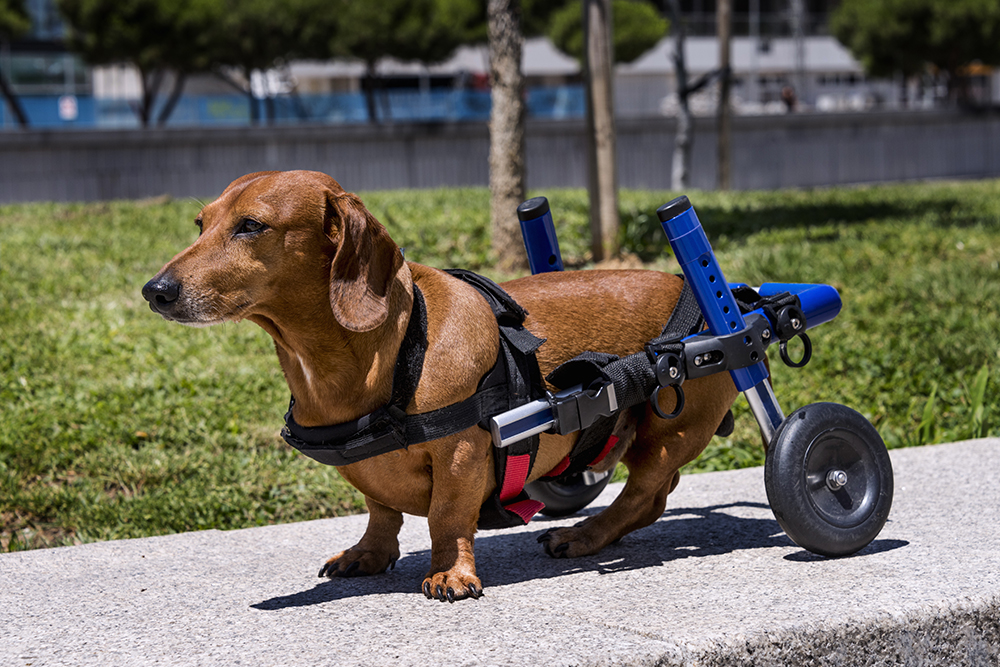
For dogs with significant hindlimb paralysis or weakness, a wheeled mobility cart provides genuine independence. The cart supports the affected limbs while the dog drives forward with their working legs, and most dogs adapt within three to seven days of consistent use.
A few practical points about cart use:
- Fitting is critical. A poorly fitted cart causes rubbing, sores, and reluctance to use it. Take measurements carefully and consult with a fitting specialist if needed.
- Use carts as part of a daily routine, not as all-day confinement. Time out of the cart matters for skin health, comfort, and continued use of any remaining limb function.
- Watch for skin irritation at contact points, particularly during the first weeks of regular use.
A cart is not a last resort. It is a tool that allows dogs with non-functional hindlimbs to run, explore, and stay engaged with the world.
Traction Aids and Knuckling Solutions
Slippery floors are one of the most common contributors to falls, injury, and lost confidence in dogs with weakened hindlimbs. The good news is that this is one of the easiest things to address.
- Rubber toe grips fit over the nails and provide traction without booties. Most dogs accept them quickly.
- Paw wax offers temporary grip and is useful for short periods on slick floors.
- Non-slip socks work for indoor use, though they wear through quickly.
- Traction booties provide more durable outdoor and indoor protection for active or rougher-use situations.
- Area rugs and runners along main travel paths inside the home create reliable traction without depending on what your dog is wearing.
For dogs with neurological conditions like DM who are starting to knuckle (where the foot turns under and the dog walks on the top of the paw), no-knuckling training socks attach to the leg and the front of the foot, gently pulling the toes back into position. They retrain proper foot placement and protect the skin while the dog still has some hindlimb function.
Home Modifications That Support Pet Mobility
Assistive devices work best in an environment set up for success. Practical home changes that consistently produce meaningful improvement:
- Add traction along main travel paths with non-slip rugs, runners, or grip mats
- Provide ramps for stairs, sofas, beds, and the car instead of expecting your pet to jump
- Raise food and water bowls to a height that allows your pet to eat without crouching
- Improve resting areas with orthopedic bedding placed at floor level, away from drafts
- Block unsafe areas like stairs, balconies, or pool edges with gates or barriers
- Adjust litter box access for cats by lowering one side or providing a step
Home modifications for cats also include ramps or steps to elevated surfaces with graduated access and heating options that support joint comfort. Cats tend to be more stubborn about change, so don’t be surprised if you need to try a few methods to make their favorite areas more accessible.
Make changes gradually rather than all at once. Pets adapt better when the home shifts a few elements at a time, and you can see what is genuinely helping versus what is just rearranging furniture.
How Mobility Devices Fit Into a Complete Care Plan
Devices improve function, but they work best when your pet’s pain and overall health are also being addressed. Mobility management is one piece of a larger plan that includes pain control, weight monitoring, and physical rehabilitation.
Pain management options have expanded considerably:
- NSAIDs like Carprofen, Galliprant, and Meloxicam provide reliable daily pain control. Periodic bloodwork monitors kidney and liver function during long-term use, and human NSAIDs (ibuprofen, naproxen) should never be given to pets.
- Monoclonal antibody injections (Librela for dogs, Solensia for cats) target the chronic pain pathway directly with monthly dosing. These have been particularly valuable for cats, who develop arthritis far more often than most families realize and who are difficult to medicate orally.
- Gabapentin addresses neuropathic pain and the nerve component of conditions like IVDD or DM, often used alongside NSAIDs rather than instead of them.
Veterinary physical rehabilitation complements device use through targeted therapeutic exercise. Hydrotherapy, manual therapy, controlled walking on different surfaces, and progressive resistance bands build strength in the limbs and core, slowing functional decline. Rehab and assistive devices are not alternatives. They are tools that work better together than either does alone.
Our preventative care services help us identify mobility risk factors early, and our diagnostic imaging capabilities provide the detailed assessment needed to guide treatment decisions when something changes.
What Improvements to Expect From a Mobility Device
Improvement does not always look dramatic, and the wins worth measuring are often small ones. Signs that a device or home modification is genuinely helping:
- More confident movement through the house
- Increased engagement in daily routines (greeting people at the door, following you between rooms)
- Less anxiety during transitions, like getting up after a nap or going outside
- Better sleep, with fewer pacing or restlessness episodes
- Fewer accidents as your pet can reach the litter box or get outside in time
- Renewed interest in play, food, or favorite spots they had abandoned
Small wins represent real quality-of-life gains. A cat who starts sitting in her favorite window again, or a dog who voluntarily climbs onto the couch for the first time in months, is telling you the plan is working.
Needs shift over time, particularly with progressive conditions. Regular check-ins allow us to adjust the plan as the condition evolves, adding new tools when current ones reach their limits. Our wellness services include ongoing evaluation of mobility and pain at every visit.
Frequently Asked Questions About Pet Mobility Aids
How do I know if my pet is in pain rather than just slowing down?
Pain in pets is easy to miss because they rarely vocalize it. Reluctance to climb stairs, difficulty rising from rest, bunny hopping in the hindlimbs, gait changes, reduced grooming of hard-to-reach areas, irritability when touched near joints, and decreased interest in play all point toward musculoskeletal pain rather than simple aging.
How quickly do pets adapt to harnesses and carts?
Most dogs adapt to a well-fitted harness within a few sessions. Carts typically require three to seven days for confident use, with many dogs actively excited to use them once they realize the cart restores independence.
Can cats benefit from mobility aids?
Yes. Ramps, steps with grip surfaces, heated orthopedic beds, and lower-sided litter boxes make a significant quality-of-life difference for arthritic cats. Harnesses and carts are less commonly used in cats but are available and used successfully in some cases, particularly for cats with neurological conditions.
Are these devices expensive?
Costs vary widely. Toe grips and grip booties are low-cost starting points. Custom-fitted wheelchairs represent a larger investment. We are happy to help you prioritize based on your pet’s most significant limitations and your budget.
My pet seems stiff only in the morning. Is that still worth addressing?
Yes. Morning stiffness that loosens up after a few minutes of movement is a classic sign of osteoarthritis, not just “old age.” Pets that warm out of stiffness are still in pain during those first minutes of the day, every day. Earlier intervention leads to slower progression and better long-term comfort.
Are there risks to using mobility carts long-term?
Used correctly, carts carry very few risks. The main concerns are skin irritation from poor fit, muscle atrophy in the supported limbs if passive use replaces all active movement, and overexertion during the excitement of regained mobility. A properly fitted cart combined with ongoing rehabilitative exercise addresses all of these.
Partnering to Support Your Pet’s Mobility
Mobility challenges do not have to mean a diminished life. With the right combination of assistive devices, home modifications, and medical support, most pets with significant movement limitations continue to live joyfully and comfortably. The earlier the conversation starts, the more strength your pet retains and the more options remain available.
East Wind Animal Hospital is here to guide you through every step. If your pet is struggling with movement, contact us to schedule an evaluation, and we will build a plan tailored to your pet’s specific situation.


Leave A Comment