
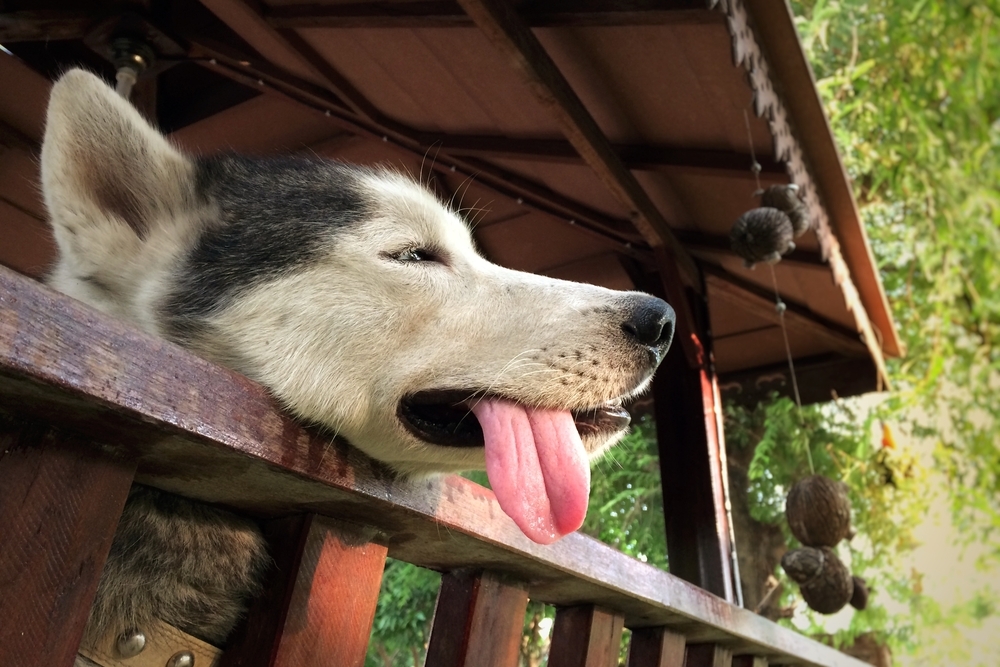
Heatstroke moves in minutes, not hours, so cooling needs to start at home rather than waiting until you reach a veterinarian. Get your pet out of the heat, wet the coat down with cool tap water, and move air across them with a fan or the car vents while someone calls ahead. Skip the ice and the freezing bath, because that kind of cold clamps down the blood vessels at the surface and holds heat in the core where the real damage is done. Time at a high body temperature is what injures the kidneys, the liver, and the blood’s ability to clot, and that harm can surface a day or two later in a pet who already seems back to normal. Cooling buys time, but it does not take the place of an exam.
East Wind Animal Hospital in Willow Grove keeps urgent care hours six days a week, so your pet can be seen during those hours rather than waiting for a routine appointment. We can begin cooling and fluid support as soon as you arrive, and our in-house lab shows us how the kidneys, liver, and circulation are handling the strain. If your pet is stable, we provide non-critical hospitalization with 24-hour monitoring, and we coordinate the transfer to a specialized emergency hospital when intensive care is needed. If your pet has collapsed, is seizing, or cannot catch their breath, or if we are closed, head straight to the nearest 24-hour emergency hospital; otherwise, start cooling and give us a call on the way in.
Cooling Starts Before the Car Ride
- Start cooling before you leave the house, using cool tap water on the paws, belly, and armpits plus a fan or the car vents moving air across the wet fur.
- Skip ice water and ice baths. Cool tap water is what you want.
- Call while someone else drives, so we know a heat case is on the way and can have fluids and cooling ready.
- The danger doesn’t end when the temperature drops, because kidney, liver, and clotting problems can surface one to three days later.
Why Do Dogs and Cats Overheat Faster Than We Do?
People sweat across nearly the whole body surface. Dogs and cats don’t. A dog sheds heat mainly by panting, moving air across a wet tongue and airway, with a small assist from sweat glands in the paw pads. That setup does fine in dry shade and struggles badly in a humid Pennsylvania July.
Some pets start the afternoon with less margin than others. Thick double coats hold warm air against the skin. Puppies and kittens don’t have the body size or the reserves to ride out a hot stretch, and senior pets with heart or airway disease lose ground quickly. Extra weight adds insulation and makes every breath more work. Short-muzzled breeds like Frenchies, Bostons, Persians, and Himalayans cool themselves through a crowded, narrow airway, so the system they depend on is the one already working overtime.
Body condition, not just skull shape, drives how well a flat-faced dog sheds heat, which makes weight control in flat-faced breeds one of the few heat risks a family can change. A few pounds off a heat-sensitive dog buys real breathing room, and weight and body condition checks at each exam are how we catch the creep before June.
What Does Heatstroke Look Like Before It Turns Critical?
Heatstroke climbs in stages, and the early rungs are the easiest to miss. Heavy panting that won’t settle, thick ropey drool, and gums shifting from healthy pink toward brick red or muddy gray are how heatstroke announces itself on the way from mild to critical. Vomiting, wobbling, and collapse mean you’re already well past that point.
| Stage | What you might see | What to do |
| Early heat stress | Steady panting, hunting for shade or tile, slowing down, warm ears | Stop the activity, get to shade or AC, offer water |
| Moderate overheating | Panting that won’t quit, ropey drool, bright red gums, unsteady gait | Begin cooling now and call us while you head in |
| Severe heatstroke | Vomiting or bloody stool, muddy or pale gums, confusion, seizures, collapse | Cool and drive straight to a 24-hour emergency hospital |
Cats are quieter about all of this. An open-mouthed, panting cat isn’t a cat who had a busy afternoon: it’s a cat in trouble. Drooling, hiding on cool concrete, restlessness, and a racing heart round out the picture, and kittens slide from warm to overheated faster than the adults do.
A thermometer tells you far more than guesswork does. Normal runs roughly 100 to 102.5 degrees, and anything above 104 needs cooling and a phone call. Temperatures in pets are typically taken rectally, and not everyone has a rectal thermometer or a pet who will cooperate, so skip the temperature taking if you can’t do it safely and just come in instead.
What Should You Do in the First Few Minutes?
Cooling starts where you’re standing, not in our parking lot. Get out of the heat, run cool tap water over the paws, belly, and armpits, and aim a fan or the car vents at the wet fur.
- Keep the air moving: evaporation is what pulls heat out of the body, so damp fur plus a fan, an open window, or the vents on high beats water alone every time.
- Offer small sips, never force fluids: a woozy pet can inhale water. Let them drink what they want and leave it there.
- Stop once they’re comfortable: ten or fifteen minutes of active cooling before you drive is plenty. Push well past that and the body can swing into hypothermia, which brings its own trouble.
- No ice and no ice bath: never lower a pet into ice water, because extreme cold slams the surface vessels shut and holds heat in the core. Don’t leave a wet towel lying on the body either, since it becomes insulation within a minute or two.
- Nothing from the human medicine cabinet: never give aspirin, ibuprofen, or acetaminophen to a pet, in the car or at home.
Have someone else drive so you can call ahead. That way our urgent care team has fluids, a thermometer, and a cooling setup waiting instead of starting from scratch when you come through the door.
What Does Treatment for Heatstroke Involve?
Hospital treatment for heatstroke runs in three layers, starting with controlled cooling, moving to intravenous fluids that replace the volume lost to panting and dilated vessels, and then treating the secondary complications. The highest risk of death falls inside the first 24 hours.
The first numbers we want on arrival are temperature, gum color, heart rate, and blood pressure. Oxygen goes on if breathing is labored, an IV catheter goes in, and active cooling continues under supervision so it stops at the right point rather than overshooting. Our in-house bloodwork and X-rays tell us quickly whether the lungs look wet and how much support your pet needs tonight.
Pets who stabilize can stay with us under 24-hour monitoring. When a pet needs true intensive care, we send the workup ahead to the receiving emergency hospital so their doctors aren’t starting from zero.
Why Can a Pet Look Better and Still Be in Danger?
A pet whose temperature comes back to normal can still be in real danger, because supportive care after a heat event means tracking kidney values, clotting times, and gut function for the next two to three days. Heat injury to the lining of the blood vessels can set off disseminated intravascular coagulation, where clotting runs wild throughout the body until the blood runs out of what it needs to stop bleeding.
| System | What can go wrong in the 24 to 72 hours after | How we keep watch |
| Kidneys | Reduced blood flow injures the filtering tissue | Repeat bloodwork, urine checks, ongoing fluid support |
| Clotting | Widespread clotting burns through clotting factors, then bleeding starts | Clotting times, plus gum and skin checks for bruising |
| Gut | The intestinal barrier leaks bacteria into the bloodstream | Watching for bloody stool, vomiting, and fever |
| Heart and circulation | Irregular rhythms and low blood pressure | Blood pressure readings and pulse quality at rest |
| Lungs | Fluid buildup and labored breathing | Chest radiographs and resting breathing rate |
When the numbers raise questions about the abdominal organs, ultrasound imaging gives us a look inside without anesthesia. This is also why we’d rather recheck a pet who seems fine than find out on day three that something was brewing.
How Do You Stay Ahead of the Heat Instead of Reacting to It?
Most of heat safety is logistics: a water bottle and collapsible bowl in the bag, a damp towel or cooling mat waiting in the shade, and a break called before the panting turns heavy. The rest is watching your own pet instead of the thermometer, because heatstroke doesn’t require a run or a car ride. A dog left in a yard after the shade moved, or a cat shut in a garage or sunroom, can get there quietly.
At home, that means more water bowls than seem necessary, refreshed with cool water through the day. Cats tend to drink more from wide, shallow dishes set away from their food. Adding water or a splash of broth to meals sneaks fluid into the pet who ignores the bowl entirely. A frozen towel to lie on, a raised cot that lets air move underneath, and a shaded patch of grass all beat a hot deck by a mile.
When Is It Too Hot for a Walk?
Most of what prevents heatstroke is scheduling: walking at dawn and dusk, shortening the route when the humidity climbs, and holding the back of a hand to the pavement for seven seconds before you commit to it. If you can’t hold your hand there for the full count, those paw pads can’t take it either. Grass, dirt, and shaded routes are worth the detour, and a midday outing can shrink to a sniff-and-return trip around the block without anyone feeling cheated. Retrievers and herding breeds will keep working past the point where they should have stopped, so ending the game is your call, not theirs. If your dog carries extra weight or has a short muzzle, book a visit and we’ll build an activity plan that fits the season.
Why Isn’t a Cracked Window Enough?
A parked car can hit 120 degrees within 20 minutes on an 85-degree day, and cracked windows barely slow the climb, which is how hot vehicles kill pets on days that feel merely warm to a person in a T-shirt. Glass traps radiant heat far faster than a two-inch gap can vent it, and even a 70-degree spring afternoon can push an interior past 100. Errands with your dog riding along work in October and don’t in August. If you spot a pet shut in a parked car around Willow Grove, calling police or animal control is the right move. And if your own pet was in a hot car, even briefly, an urgent evaluation beats waiting to see how the evening goes.
How Do Outdoor Cats Get Through a Heat Wave?
Outdoor cat safety in a Willow Grove August comes down to several shaded water bowls refreshed twice a day, a ventilated shelter that doesn’t turn into an oven, and a reliable way back indoors when the sun is highest. Cats hide discomfort well, so the setup has to do most of the work.
They also seek out cool, dark, enclosed spots, which is how they end up in sheds, crawl spaces, and wheel wells. A knock on the hood before starting the car is a small habit worth keeping. A shaded catio or a supervised harness hour offers the same outdoor time with a guaranteed exit. And any cat lying stretched flat on concrete, panting and drooling, has already crossed from warm into overheated.
What Keeps Pets Comfortable Indoors on a 95-Degree Day?
The indoor job is a cool room and a quiet afternoon. Air conditioning is the best tool, though a fan aimed at a favorite resting spot, and access to tile, a basement, or a bathroom floor all help.
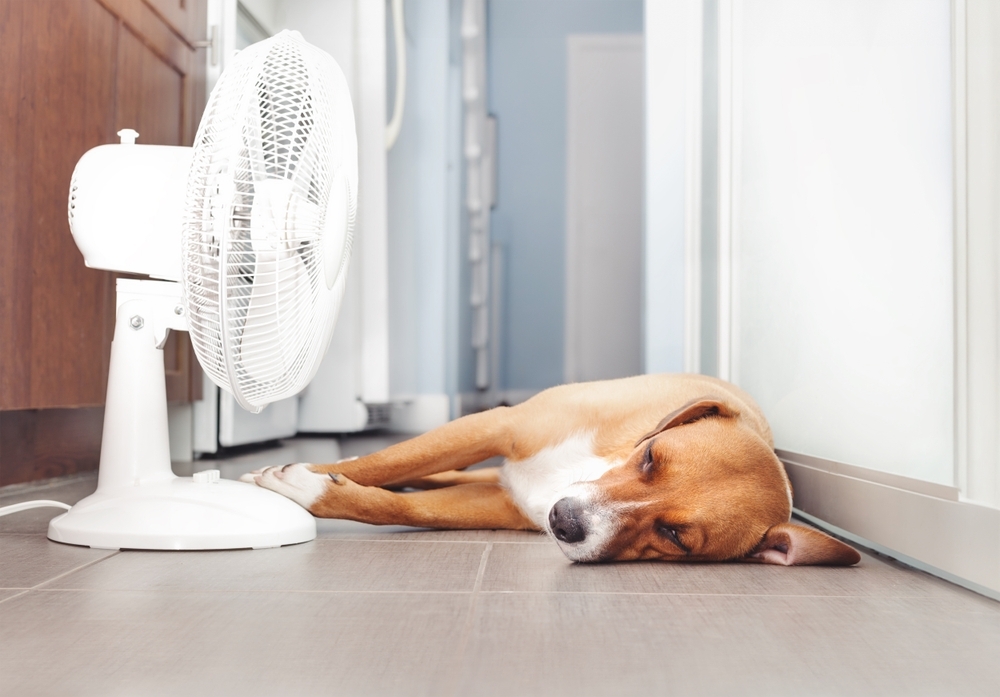
Boredom is the other half of a long hot day. Frozen food puzzles, a scent game down the hallway, and five minutes of trick training work as indoor boredom busters that tire a pet out mentally without raising core temperature. A muffin tin with kibble hidden under tennis balls, or a towel rolled around a few treats, turns into DIY enrichment for dogs with nothing bought and nothing plugged in. Cats will happily take a paper bag, a cardboard box, and a wand toy session in the coolest room of the house. Save fetch for after sunset.
Questions We Hear When the Heat Index Climbs
Is a fan by itself enough to cool a dog down?
Not on its own. A fan works by speeding up evaporation, and dry fur gives it almost nothing to work with. Wet your dog down with cool tap water first, then aim the fan at them. In a closed room that’s already hot, a fan is only moving hot air around, so open a window or get to air conditioning at the same time.
Should I shave my dog for the summer?
Usually not, at least for double-coated breeds like Huskies, German Shepherds, and Golden Retrievers. That undercoat insulates in both directions and shields skin from the sun, and taking it off can bring sunburn and patchy regrowth. Brushing the dead undercoat out helps far more than clippers do. Single-coated dogs and badly matted coats are a different conversation, and matting on its own is a good reason to trim. Ask us before the grooming appointment.
How hot is too hot for my pet?
There’s no single number. Humidity matters as much as temperature, since panting stops working well once the air is already saturated. A short-muzzled dog can be in trouble in the mid-80s on a sticky day, while a lean, heat-acclimated Lab handles the same afternoon comfortably. Age, weight, coat, and any heart or airway disease all move the line. When you’re unsure, use the seven-second pavement check and shift activity to early morning.
Keeping Pets Safe Through the Rest of a Willow Grove Summer
The dog who was fine on the porch ten minutes ago can be in real trouble now, and the cat asleep in a sunny window can drift there without a sound. Water, airflow, and a fast trip to a veterinarian are what change the ending, and most heat events never happen at all once the walk moves to 6 a.m. and the car stays empty. If you’d like a summer plan built around your pet’s breed, age, and shape, schedule a wellness visit with us at East Wind Animal Hospital in Willow Grove. If a heat emergency happens outside our urgent care hours, go straight to the nearest 24-hour emergency hospital.



Leave A Comment